



PRESIDENT’S COMMENT
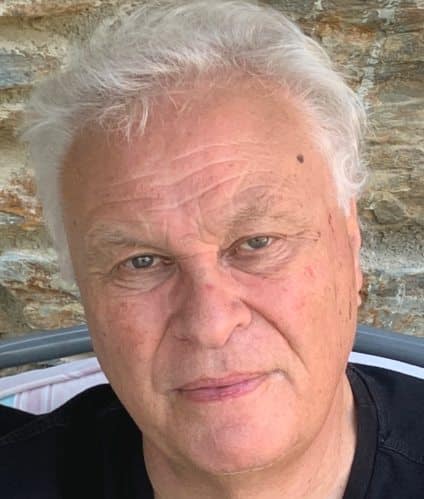 From the Children of Peace Founder.
PEACE ISSUE
On 30 July 2026 agreement was reached on the decommissioning of weapons by Hamas and the transition to a civil government in Gaza. The effectiveness of this MOU is wholly dependent on a stage-by-stage arrangement between Israeli withdrawal and Hamas disarmament.
As a Children of Peace Friend, leading Palestinian peace activist Ahmed Fouad Alkhatib writes on X: “Reporting on Hamas’s supposed willingness to disarm should be met with intrigue, but must also be treated with firm scepticism.”
In this edition our correspondents focus on the important roles that women play in Israeli society (Rolene Marks) and the unexpected consequences facing women in Gaza (Sara al-Najjar).
And we give our first 2026 grants…
- UK Med (Gaza field hospitals)
- Desert Stars (Bedouin community in the Negev)
- The Freddie Krivine Initiative (multicultural programmes for children and youth in Israel).
All well deserving NGOs carrying out vital work.
Richard Martin FRSA.

PLEASE HELP CHILDREN OF PEACE TODAY
We receive no donations from governments or international bodies. Yet our work for peace is vital. We are proud of our achievements. Individual donors from around the world have made Children of Peace the largest peace network across the MENA.
Our Coalition of Peace builds bridges not walls.
DONATE NOW...
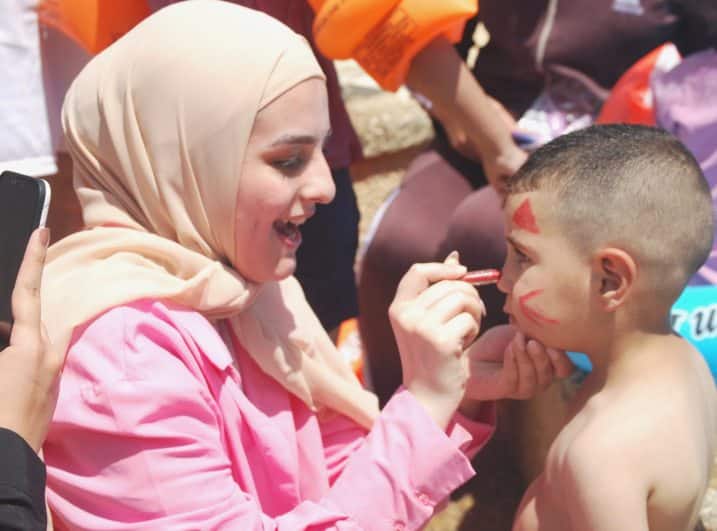
A Fun Day in Murad, summer 2025, for West Bank Palestinian children.
NEWS – AUGUST 2026
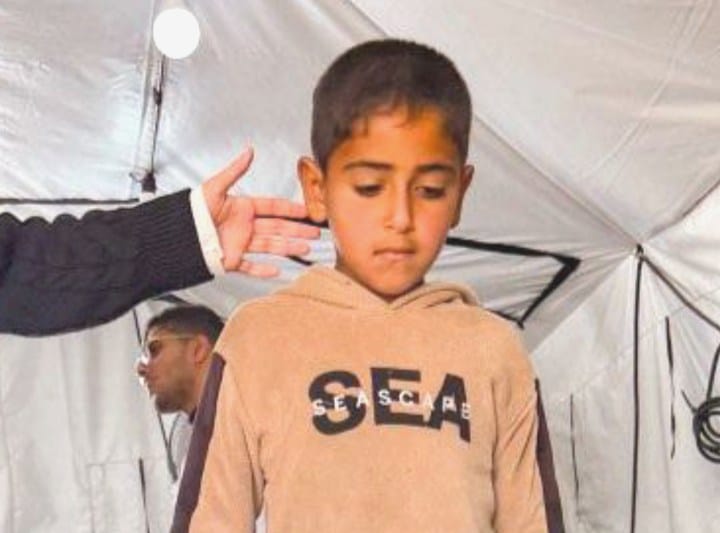
The 2026 Grants

Carry The Nation
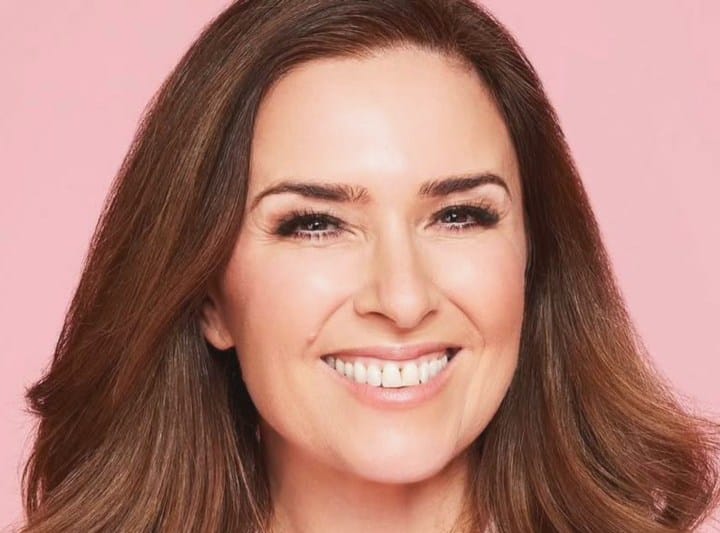
A New Friend
THE CHILDREN OF PEACE GRANTS
At a pivotal time when peace is possible, Children of Peace is delighted to announce the first tranche of our 2026 Annual Grants. The grants go to UK Med, Desert Stars and the Freddie Krivine Initiative. All meet our rigorous standards and are all remarkable organisations. Congratulations!

UK MED Gaza Field Hospital, Grant: £10,000
Holly Smith from UK Med tells us more…
UK-Med is honoured to receive a grant from Children of Peace to support our work in Gaza. This generous contribution will help deliver vital healthcare to children and families affected by the ongoing conflict.
Founded on the values and expertise of the UK’s National Health Service, UK-Med is a frontline medical aid charity working for over 30 years to ensure people get the healthcare they need during emergencies. UK-Med was the first UK organisation verified by the World Health Organization as an Emergency Medical Team, a mark of quality, trust and readiness.

In Gaza, our international and Palestinian colleagues work together to provide safe, skilled and compassionate care in extremely challenging conditions.
Support from Children of Peace will help fund medical care, specialist services and training for Palestinian healthcare workers. Across five facilities, UK-Med delivers 60,000 to 70,000 medical consultations each month, making us one of the largest healthcare providers in Gaza. Teams provide emergency treatment, surgery, maternal and child health services, rehabilitation and mental health support.

One child treated by UK-Med is seven-year-old Mohammed. After developing a serious autoimmune condition linked to overcrowded living conditions and poor water quality, he lost the ability to walk. Following regular rehabilitation sessions with UK-Med specialists, Mohammed is gradually regaining his strength and mobility.
This award will ensure children like Mohammed and their families receive the healthcare they need.
Our sincere thanks to the Children of Peace board for your partnership.


DESERT STARS, Grant: £5000
Menucha Saitowitz from Desert Stars outlines the importance of their work in supporting Bedouin communities in the Israeli Negev.

Building the Next Generation of Bedouin Leaders in the Negev
Desert Stars is deeply grateful to Children of Peace for its support of our work with young Bedouin men and women across the Negev.
Bedouin society is one of Israel’s youngest and most underserved communities. Many young people grow up with limited access to quality educational opportunities, professional networks, and meaningful encounters with communities beyond their own. Yet they also bring enormous talent, ambition, and a deep desire to contribute to their families, communities, and wider society.

Desert Stars works to turn that potential into long-term leadership. Through our youth programs, Leadership High School, gap-year leadership programs, and alumni network, we accompany youth from adolescence into higher education, employment, and positions of influence. Participants strengthen their academic skills, confidence, Hebrew, leadership abilities, and capacity to work with people from different backgrounds.
Our programs also create opportunities for young Bedouin participants to engage with the diversity of Israeli society. Through shared learning, volunteering, dialogue, and encounters with Jewish peers, they develop the relationships and tools needed to build a more inclusive future for the Negev.
The support of Children of Peace helps us continue providing young people with the personal guidance, educational preparation, and leadership experiences they need to shape their own futures and create change around them.
For us, peace is not only an agreement between leaders. It is built through trust, opportunity, shared responsibility, and relationships formed over time.
By investing in young Bedouin leaders today, Children of Peace is helping build the foundations for a stronger and more connected society tomorrow.


FREDDIE KRIVINE INITIATIVE, Grant: £5000
Jane Krivine looks at the importance of their work in building relationships across communities…
Since the October 7 massacre it has been very difficult to bring Arab and Jewish children together with so much tension. This year in particular, with the Iran war, we were running in and out of shelters, stopping and starting our activities.
In our region, Jewish and Arab towns, villages and communities are in close proximity, so everyone was affected. Fortunately, we were able to obtain a steady presence of children on the courts and in the clubhouse.

This is the backdrop to our application for help this year from the ever-mindful Children of Peace. We were more motivated than ever in developing the programme we have been running for over 25 years, bringing tennis to Arab children and through tennis, introducing Arab and Jewish children to each other.


The highlight of the year was our sixth summer camp, attended by 18 Jewish and 18 Arab children. The camp combines sport, teamwork, and adventure in an atmosphere of cooperation and fun. Alongside tennis, the children took part in a wide range of activities including MasterChef cooking challenges, archery, zip-line and ropes course adventures, basketball, yoga, and team-building games. Every activity was designed to encourage communication, trust, and collaboration across cultural boundaries.
Four Jewish and five Arab youth counsellors, alumni of earlier summer camps, returned as leaders, demonstrating the lasting impact of the Initiative.
The month of August is our summer break, and the Freddie Krivine Initiative will re-open on September 1.
We are all hoping for better times.

Sara Damergi joins us as a Friend
We welcome Sara Damergi to Children of Peace. Sara joins our distinguished group of Friends who support the work of our charity.

Sara Damergi is a British television presenter, best known for Channel 4’s A Place in the Sun and Coast vs Country.
Sara has worked across live broadcasting, consumer affairs, travel journalism and radio, with appearances on BBC One, ITV and Channel 5. She also is a property developer in Beirut, Lebanon.
Born to an English mother and Lebanese father, Sara has spoken openly about growing up between cultures and the importance of empathy, understanding and communication across communities. Her personal experiences have given her a strong appreciation for the value of dialogue, compassion and opportunities for children to feel safe, supported and heard.
As a mother of two, Sara is particularly drawn to initiatives that focus on children’s wellbeing, education and future opportunities. She is proud to support Children of Peace and the organisation’s work in helping young people build hope, friendship and understanding despite conflict and division.
Sara writes,
“Having left Beirut during the war in the 1980s, I understand first-hand the long and far-reaching impact conflict can have on children, families and communities for generations. That experience has made me deeply aware of how important organisations like Children of Peace are in protecting the humanity, innocence and hope of childhood. I truly believe that no matter where a child is born, every child deserves the chance to feel safe, valued and hopeful about their future. It is for that reason that I am more than honoured to become a Friend of Children of Peace.”
The Women who carry a nation
Our Israeli Correspondent Rolene Marks looks at the extraordinary contribution Israeli women – Christian, Druze, Muslims and Jews – have made to this multicultural society during difficult times.
The women of this country are remarkable. They are every kind of wonder woman you could possibly imagine. In the last three years, the women of Israel, from all walks of society, have been the backbone of Israel. They have held our country on their mighty shoulders as we have endured war, tragedy and grief with customary resilience. We have learnt that grief and resilience walk together hand in hand.
The women of Israel, Christian, Muslim, Druze and Jew, are the ones who serve on the frontline and the ones who hold down the home front, who volunteer in every imaginable way. The women of Israel have held each other during our darkest moments and contrary to what the media wants you to think about our country, we support each other. While Israel is not perfect by any means, we are certainly not a country where division and distrust are pervasive.
On 7 October, Hamas made no distinction between any nationality – they slaughtered indiscriminately. Fatma Alttalaqat, 35, a mother of nine children, was murdered by Hamas terrorists near Ofakim on October 7, 2023. Aisha, a 16-year-old Muslim Bedouin girl, was taken hostage on that Black Sabbath. These are just two examples of many.

The women of Israel have had their bond forged stronger by the fires of war. We have buried our husband and children together, we have celebrated the release of our hostages together, we have prayed together, we have wept together and we are trying to rebuild, together.
The women of Israel are the wives, girlfriends, partners of soldiers, offering strength and support while our warriors defend and protect. The weight of responsibility that they carry on their shoulders is enormous- and yet they are the unbreakable spine of our country. When I think of the women of Israel, I think of women like Tali Hadad, a kindergarten teacher from Ofakim who rescued her wounded son and other victims amidst intense gunfire on 7 October or Rachel Goldberg-Polin, who in her fight to free her son, Hersh, from captivity inspired the world with her strength and humanity. Hersh was murdered along with five other hostages and the world, in turn, hold Rachel in her grief with love. I think of Noura, who turned her restaurant kitchen into a place soldiers could come and eat for free. I think of the formidable Lucy Aharish and Lt Ella Waweya, who are our voices to the media and Arab world.

Our women defending us in the skies, flew missions to Iran as pilots and navigators to strike at the heart of the despotic regime that has persecuted their own women and girls. There is something magnificently poetic about that.
We are the women of Israel. We are complex. We are diverse. We hurt. We heal. We fight. We are resilient. We are waiting for you to meet us.


OUR COALITION OF PEACE
… is a unique peace network with affiliates on every continent, and especially in Gaza, Israel, Jordan, the West Bank, Turkey, Egypt and Morocco.
WHEN DIVORCE BECOMES A MIRACLE. THE UNTOLD STRUGGLE OF WOMEN IN GAZA.
Gaza journalist and former television presenter Sara al-Najjar looks at an unexpected impact of the conflict on Palestinian women.

Sara al-Najjar
In the narrow, winding alleys of displacement camps, stories of survival echo quietly beneath the canvas tents. For many women in the Gaza Strip, the war has not only stripped away their homes and safety. It has erased the most fundamental components of their personal sovereignty.
To understand the daily reality of a woman seeking divorce in Gaza today, one must look past the statistics of destruction and into the crumbling remnants of the civil infrastructure. Since the escalation of hostilities in October 2023, the judicial system has faced near-total paralysis. Courts were flattened, legal archives buried under rubble, and the formal mechanisms designed to protect women’s legal rights were temporarily wiped out.
For over two years, thousands of women seeking separation from abusive or untenable marriages found themselves trapped in a bureaucratic and physical void. While some courts have begun a limited, fragile resumption of operations, navigating the system remains an uphill battle defined by missing paperwork, destroyed evidence, and missing documentation of domestic abuse or financial neglect.
The Legal and Human Cost of Survival
According to reports from local human rights organizations and legal aid groups, thousands of pending family law cases remain stalled. Women face compounding hurdles…
- The destruction of evidence: Medical reports, police records, and legal testimonies documenting psychological or physical harm lie beneath tons of debris.
- Financial and Social Pressures: Many husbands refuse amicable divorces, often leveraging financial distress, the refusal to pay alimony, or social stigma to block separation.

A Fractured Judiciary
With scarce personnel, damaged facilities, and lost archives, judges and lawyers struggle to process a staggering backlog of cases under catastrophic conditions.
Yet, behind these institutional barriers are deeply human stories of resilience.
Consider Marwa Fawzy (a pseudonym used to protect her identity), whose journey toward separation began before the war. Displaced repeatedly, facing the profound grief of losing her son, and enduring extreme economic hardship, Marwa viewed divorce not as the end of a chapter, but as her ultimate weapon for survival. When her husband was released from Israeli detention, she pleaded for an amicable separation. Like many men in similar positions, he refused, citing a supposed change of heart. But Marwa’s resolve was unshakeable. Having endured years without basic respect or partnership, she refuses to remain tied to a dynamic that drains her spirit. Today, she moves between legal aid offices and women’s shelters, fighting a fragmented system alongside other women seeking the same elusive verdict: freedom.
Marwa draws hope from women like Eman Raed who fought a decade-long battle for her rights, ultimately securing her divorce only after relinquishing all financial entitlements just to escape under intense legal pressure. For these women, divorce is not a casual choice; it is a desperate, calculated act of self-preservation.
Redefining Sacrifice: Breaking Generational Trauma
In traditional patriarchal societies, women facing marital breakdown are frequently met with the familiar refrain: “For the sake of the children, sacrifice. Forget your dignity, swallow your pain.”
However, psychologists and human rights advocates in the region note a profound generational shift. Women in Gaza are increasingly recognizing that raising children in a deeply fractured, abusive, or violent household inflicts invisible wounds far deeper than the physical reality of separation. By choosing to reclaim their autonomy, these mothers are teaching their children a vital, unspoken lesson. Self-respect, emotional safety, and dignity are non-negotiable.
A Call to the International Community
On paper, Palestinian family law and international human rights conventions, including the Convention on the Elimination of All Forms of Discrimination Against Women, unequivocally enforce women’s rights to equality, protection, and legal dissolution of marriage. Yet, the chasm between legal text and wartime reality is vast.
In a society grappling with collective trauma, the women of Gaza who pursue divorce do not need moral judgment. They need unwavering solidarity.
When reconciliation is utterly impossible, the international community, legal advocates, and human rights defenders must amplify their voices, ensuring that the fundamental human right to freedom, safety, and dignity is restored – one verdict at a time.


Photo credits to Unsplash…
Rolene article: Levi Meir Clancy, Yoav Aziz, UC Berkeley Dept of Geography, Yoav Aziz. Gaza sign: Emad El Byed. Al-Najjar article: Ifrah Akhter, Mohammed Ibrahim.